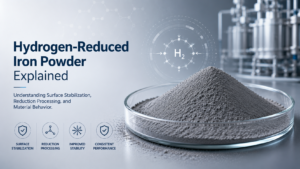
Understanding Reactive Materials, Process Integration & Industrial Performance
🔹 Introduction
Iron powders are widely used in chemical and process-oriented industrial applications where material behavior, surface interaction, and process stability play important roles.
In many industrial systems, iron powders function as:
- Reactive materials
- Process-support materials
- Thermal integration components
- Surface interaction systems
- Chemical processing agents
Their performance depends heavily on:
- Particle characteristics
- Surface condition
- Purity profile
- Oxidation behavior
- Manufacturing consistency
As modern industrial chemistry continues evolving, controlled iron powder systems are increasingly used in applications requiring:
- Stable process integration
- Controlled reaction behavior
- Reliable surface performance
- Long-term manufacturing reproducibility
🔹 Why Iron Powders Are Used in Chemical Processing
Iron powders offer several characteristics valuable in industrial processing environments, including:
- High surface interaction capability
- Controlled particle engineering
- Thermal process compatibility
- Stable handling behavior
- Industrial scalability
These characteristics make iron powders suitable for applications involving:
- Reactive processing systems
- Surface treatment operations
- Industrial chemical integration
- Thermal manufacturing environments
- Process-oriented industrial technologies
Different applications may require different particle and surface characteristics depending on system requirements.
🔹 Importance of Surface Characteristics
Surface condition is one of the most important factors influencing chemical processing behavior.
Surface characteristics may affect:
- Reaction interaction
- Oxidation behavior
- Thermal stability
- Environmental response
- Process consistency
Controlled surface systems help support:
- More predictable industrial behavior
- Reduced variability
- Stable process integration
- Reliable long-term performance
Surface engineering therefore plays an important role in industrial iron powder systems.
🔹 Particle Characteristics and Process Performance
Particle size and morphology may influence:
- Surface area interaction
- Flow behavior
- Packing density
- Process stability
- Industrial handling consistency
Fine and controlled particle systems may support:
- Improved process uniformity
- Stable industrial integration
- Reliable material distribution
- Better manufacturing reproducibility
Particle engineering is therefore important in chemical processing environments.
🔹 Thermal Stability in Industrial Systems
Many industrial chemical systems involve:
- Elevated temperatures
- Controlled atmosphere environments
- Thermal processing stages
- Surface interaction under heat exposure
Thermal behavior may influence:
- Material stability
- Oxidation tendency
- Structural consistency
- Process reliability
Controlled manufacturing systems help support more stable thermal performance across industrial applications.
🔹 Oxidation Behavior and Environmental Interaction
Iron powders naturally interact with oxygen and environmental conditions.
Oxidation behavior may influence:
- Surface stability
- Storage consistency
- Chemical interaction
- Industrial process performance
Controlled stabilization systems help support:
- Reduced oxidation variability
- Improved environmental stability
- More reliable process integration
- Consistent industrial handling behavior
Environmental stability is therefore important in many industrial processing systems.
🔹 Process Consistency and Manufacturing Reliability
Industrial chemical applications often require:
- Stable particle systems
- Controlled impurity profiles
- Reliable surface consistency
- Reproducible processing behavior
- Long-term manufacturing reliability
Controlled manufacturing environments help support:
- Better batch reproducibility
- Reduced process variability
- Stable industrial integration
- Reliable material performance
Manufacturing discipline therefore plays an important role in dependable industrial processing systems.
🔹 Industrial Applications of Iron Powders in Chemical Systems
Iron powders are used across several industrial processing environments, including:
- Chemical manufacturing systems
- Thermal processing operations
- Surface engineering technologies
- Reactive industrial systems
- Process-support manufacturing environments
- Specialized industrial applications
Different systems may require different:
- Particle structures
- Surface characteristics
- Thermal performance profiles
- Manufacturing consistency standards
🔹 Evolving Industrial Chemical Technologies
Modern industrial systems increasingly emphasize:
- Precision material engineering
- Controlled surface behavior
- Stable thermal integration
- Process-oriented manufacturing systems
- Long-term industrial reproducibility
As industrial technologies continue advancing, demand for:
- Stable powder systems
- Reliable process integration
- Controlled manufacturing quality
- Precision particle engineering
is expected to continue increasing.
🔹 Serena Nutrition Perspective
At Serena Nutrition, we manufacture high-purity iron powders through controlled manufacturing systems designed for specialty and industrial applications.
Our approach emphasizes:
- Stable particle characteristics
- Controlled impurity management
- Reliable surface consistency
- Manufacturing reproducibility
- Process-oriented quality systems
- Long-term industrial reliability
We believe particle engineering, surface stability, and controlled manufacturing are important foundations of dependable industrial iron powder systems.
🔹 Key Takeaways
- Iron powders are widely used in industrial chemical processing systems
- Surface characteristics strongly influence process behavior and stability
- Particle engineering affects industrial integration and handling performance
- Thermal stability influences reliability in process-oriented environments
- Oxidation behavior affects storage consistency and surface interaction
- Controlled manufacturing supports dependable industrial reproducibility
- Precision powder systems are increasingly important in modern chemical