Chemical Behavior of Iron Powder in Reactions
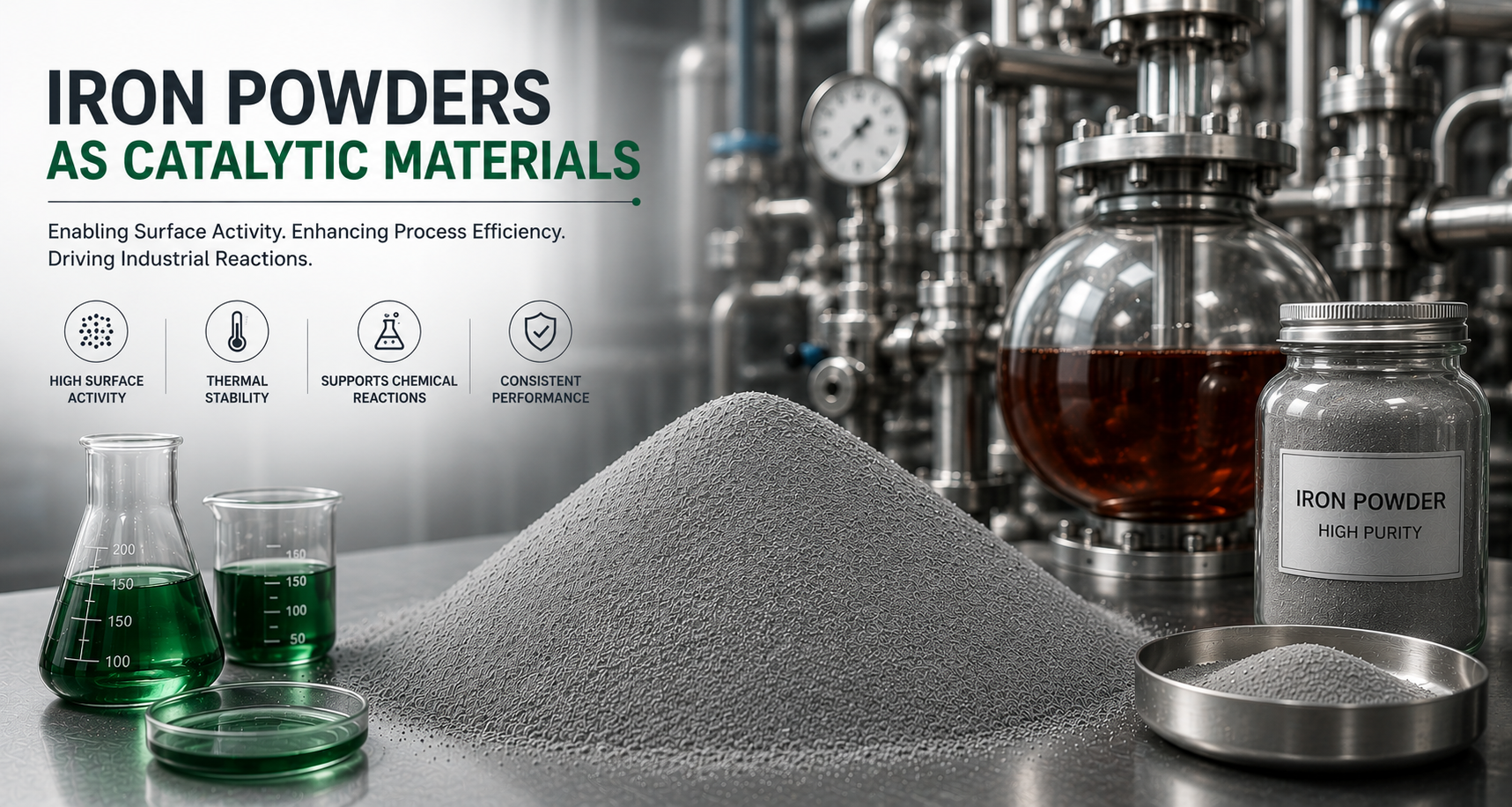
Iron powder is widely used in chemical and process industries due to its reactivity and reducing properties. However, its behavior in reactions is not uniform — it depends heavily on:
Iron powder is widely used in chemical and industrial applications where purity, consistency, and controlled reactivity are essential.
In these applications, performance depends not on appearance, but on chemical composition, impurity profile, particle characteristics, and manufacturing process.
Selecting the right iron powder requires an understanding of how it behaves in controlled reactions, how impurities influence outcomes, and how consistency affects reproducibility.
This section explores key considerations for using iron powder in chemical and industrial processes.

Iron powder is widely used in chemical and process industries due to its reactivity and reducing properties. However, its behavior in reactions is not uniform — it depends heavily on:

Iron powder is widely used across various industrial applications due to its reactivity, availability, and functional versatility.

In industrial and chemical processes, consistency is one of the most critical factors influencing performance. While material specifications define acceptable ranges,

In chemical and industrial applications, the performance of iron powder is not determined by iron content alone. Even small amounts of impurities can significantly influence reaction behavior, product quality, and process consistency.

Iron powder is widely used in chemical and industrial applications where controlled reactions, consistent material behavior, and reliable outcomes are essential.